
Unsync Two iPhones: Apple’s Five Steps, Sign Out First
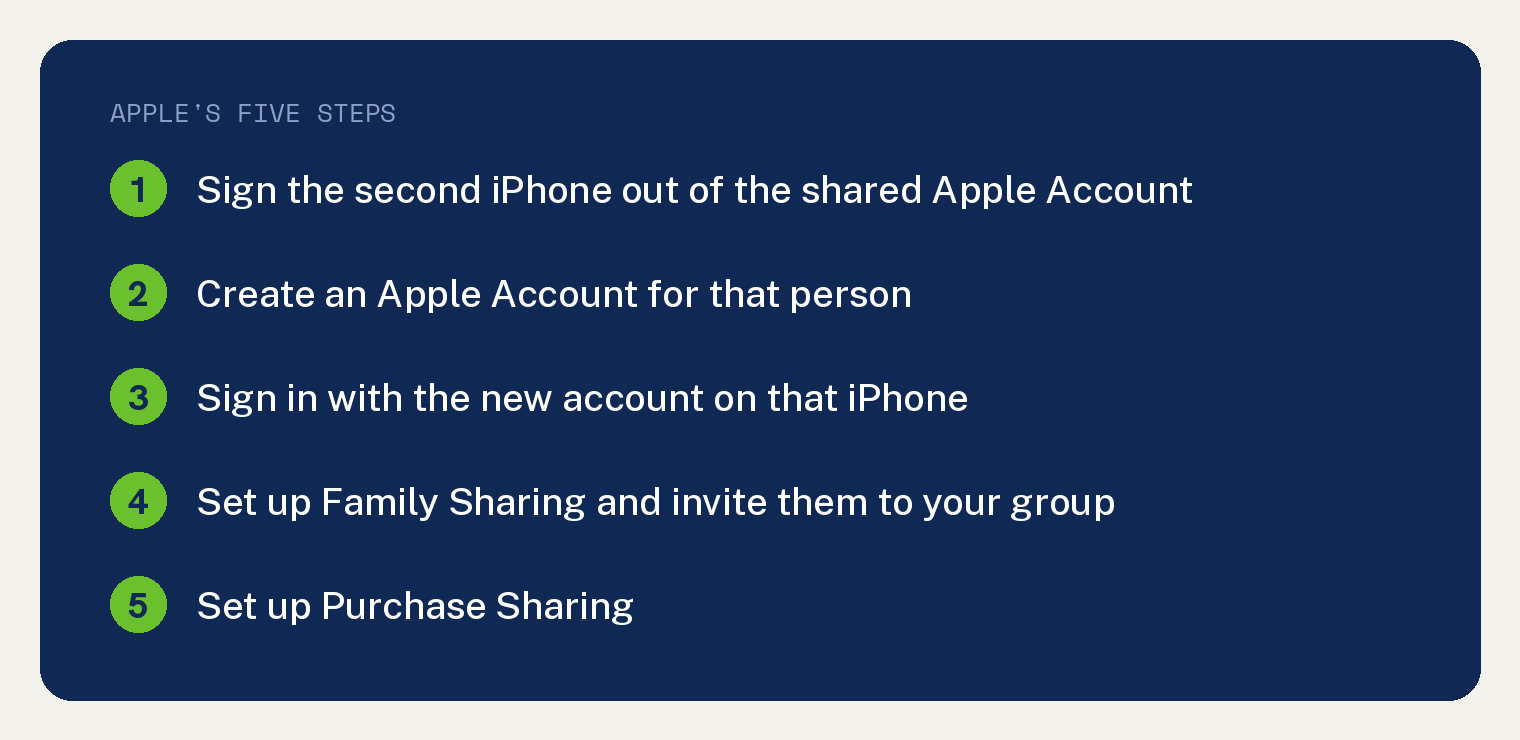
To unsync two iPhones that share one Apple Account, give the second phone its own account. Apple’s shared account page puts it in five steps: sign the second phone out, create an Apple Account for that person, sign in with it, set up Family Sharing, then set up Purchase Sharing.
Neither of the two Apple pages cited below uses the word unsync. What they describe is two people on one Apple Account, and Apple’s line on that is plain: “each family member needs to use their own Apple Account.”
Why two iPhones on one account share texts and calls
Apple says certain services on a shared account treat the two people as the same person, so one phone’s calls show on the other and its texts might. Apple’s words: “Your data will get mixed together because certain services will treat you and your family member as the same person.”
Messages: “You might receive text messages and voicemails that are intended for your family member.” Call history: “Your recent call history will include any calls made and received by your family member.”
This site covers Apple’s full list under what happens when two iPhones have the same Apple ID.
Before you sign the second iPhone out
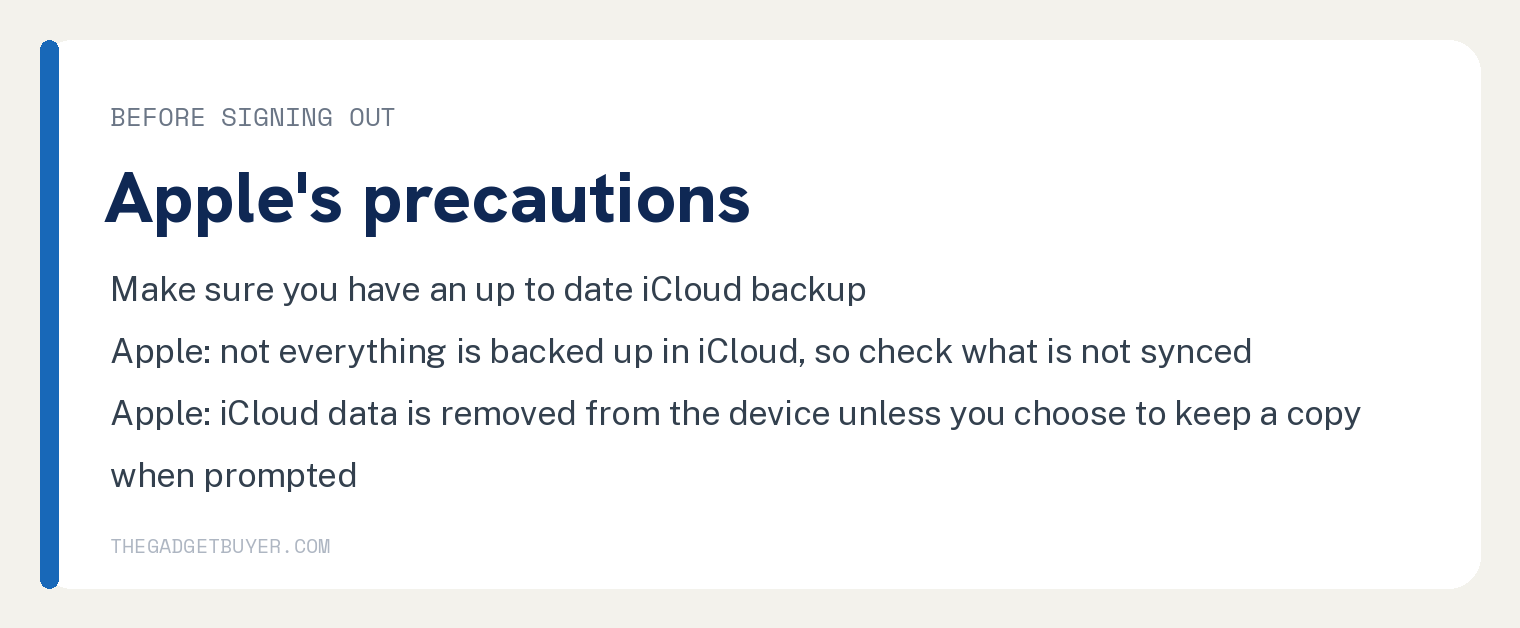
Signing out removes iCloud data from that phone unless you keep a copy, so back it up first. Apple’s sign out page: “Your iCloud data will be removed from your device unless you choose to keep a copy of that data when prompted.”
Apple’s precautions, under “To help prevent data loss:”: have an up to date iCloud backup; if you changed synced content recently, wait or check iCloud.com or another device to see that it synced; “Not everything is backed up in iCloud”, so make sure you have access to anything not synced to it; and Apple’s own recommendation to also archive or copy what you store in iCloud.
The fifth item on the same list: “If you don’t know your Apple Account password, change your password before you sign out of a trusted device.”
Step 1: sign the second iPhone out
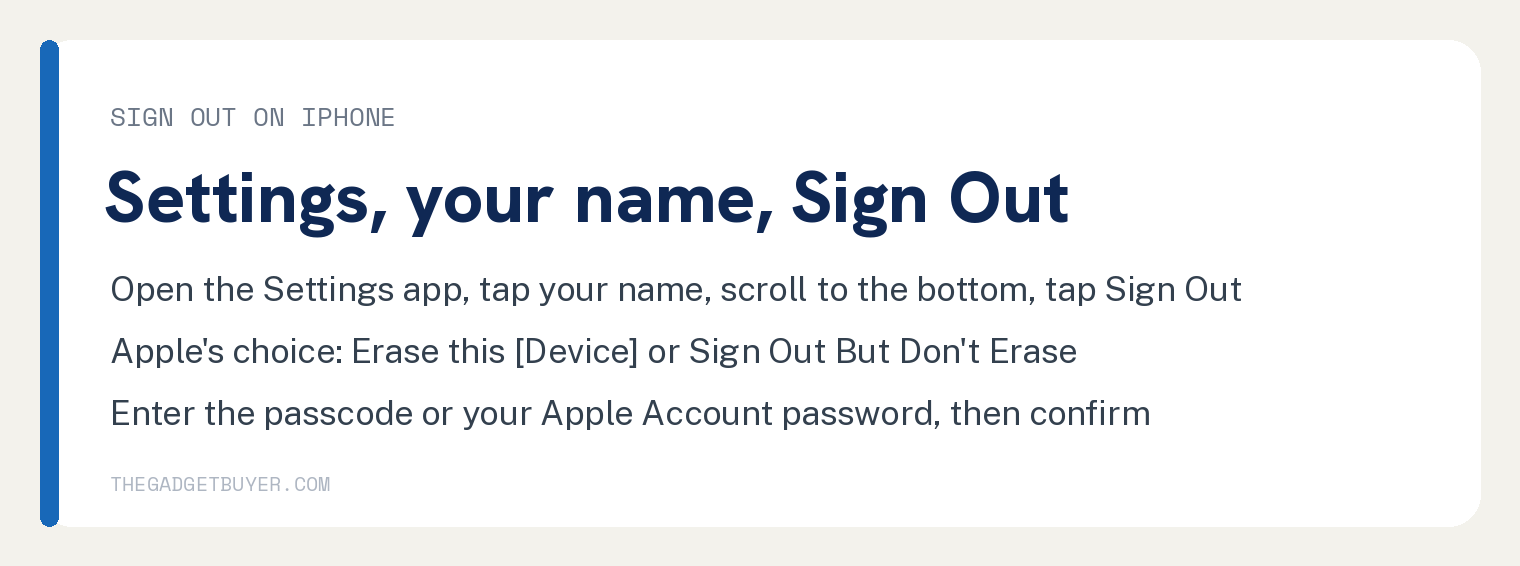
Apple’s shared account page starts here: “On the family member’s device, sign out of their device”. The sign out page it links to gives the steps for an iPhone, which run as follows.
- Open the Settings app, then tap your name.
- Scroll to the bottom and tap Sign Out.
- Pick one of Apple’s two choices: “Choose Erase this [Device] or Sign Out But Don’t Erase”.
- Read the prompts, which Apple says tell you what information will remain on the phone or be erased.
- Enter that phone’s passcode or your Apple Account password.
- Finish on the branch you picked: “If you chose Sign Out But Don’t Erase, tap Confirm and Sign Out.” or, for the erase branch, tap Sign Out and then Sign Out again to confirm.
Signing out of the account signs that phone out of more than iCloud. Apple: “When you sign out of Apple Account on your device, you’re automatically signed out of iCloud, the App Store and other Apple media services, iMessage, and FaceTime.”
Information stored in iCloud stays there, in Apple’s words it “remains available in iCloud”.
A paired watch follows the phone. Apple: “When you sign out on the iPhone that’s paired with your Apple Watch, you’re automatically signed out of Apple Account on your Apple Watch.”
Steps 2 to 5: a new Apple Account, then Family Sharing
Apple’s next four steps, in its order: ask the person to create an Apple Account, have them sign in with it on their phone, “Set up Family Sharing and invite the family member to your group”, and “Set up Purchase Sharing”.
For a child, Apple adds at step 2: “If the family member is under 13,” create a Child Account, and notes that “Age varies by state, country, or region.”
Family Sharing is what keeps the sharing you did want. Apple: “To share purchases and subscriptions with your family, you need to have Family Sharing set up, and each family member needs to use their own Apple Account.”
If the new account has no phone number to hand, this site covers an Apple ID without a phone number.
If you want to keep one account and stop only some sharing
Apple’s sign out page offers a lighter option. “If you only want to stop using some iCloud features, you can change your iCloud settings instead of signing out of iCloud.”
The page gives no per feature steps, so this article gives none.
The same page lists what signing out turns off, and the list is long. Among its items are iCloud Backup, iCloud Photos, Messages in iCloud, Find My, and updates to your contacts, calendars, reminders, bookmarks and Safari tabs.
The full list is on Apple’s page.
If the second iPhone is no longer yours
A phone you cannot reach gets removed from the account side. Apple: “If you don’t have access to the device anymore and can’t sign out, remove it from your Apple Account”.
Those words are a link on Apple’s page to a separate article, not cited here.
Claims the two Apple pages leave out
An earlier version of this article gave an iTunes Manage Devices route and a remove button in the devices list. Neither Apple page cited below prints Manage Devices, iTunes in the Cloud or a remove button; the only line on either page about removing a device from your Apple Account is the one above, for a device you can no longer reach.
The words unsync, unlink and mirror print on neither page, and neither page mentions two backups or one phone’s pictures taking up the other’s space. Both phones backing up to one account is its own question, and this site covers backing up two iPhones to the same iCloud account.
Frequently asked questions
How do I stop my two iPhones from syncing with each other?
Give one of them its own Apple Account. Apple’s five steps: sign that phone out, create an Apple Account for its owner, sign in with it, set up Family Sharing, then Purchase Sharing. The two Apple pages cited below print no steps for keeping one account on both phones and stopping the mixing; the nearest line is “If you only want to stop using some iCloud features, you can change your iCloud settings instead of signing out of iCloud.”
Will I lose my photos if I sign out of iCloud on one iPhone?
Apple says information stored in iCloud stays there, and the choice you make at sign out decides whether a copy stays on the phone: “Your iCloud data will be removed from your device unless you choose to keep a copy of that data when prompted.” Apple’s first precaution before signing out is an up to date iCloud backup.
Can two iPhones have the same Apple ID?
They can be signed in to one, and Apple’s shared account page says what follows: “You might experience issues if you share an Apple Account with another family member.” Apple’s advice is one account per person, joined by Family Sharing.
Do I have to erase the second iPhone to sign it out?
No. Apple’s third sign out step offers a choice: “Choose Erase this [Device] or Sign Out But Don’t Erase”. The Sign Out But Don’t Erase path ends with “tap Confirm and Sign Out.”